
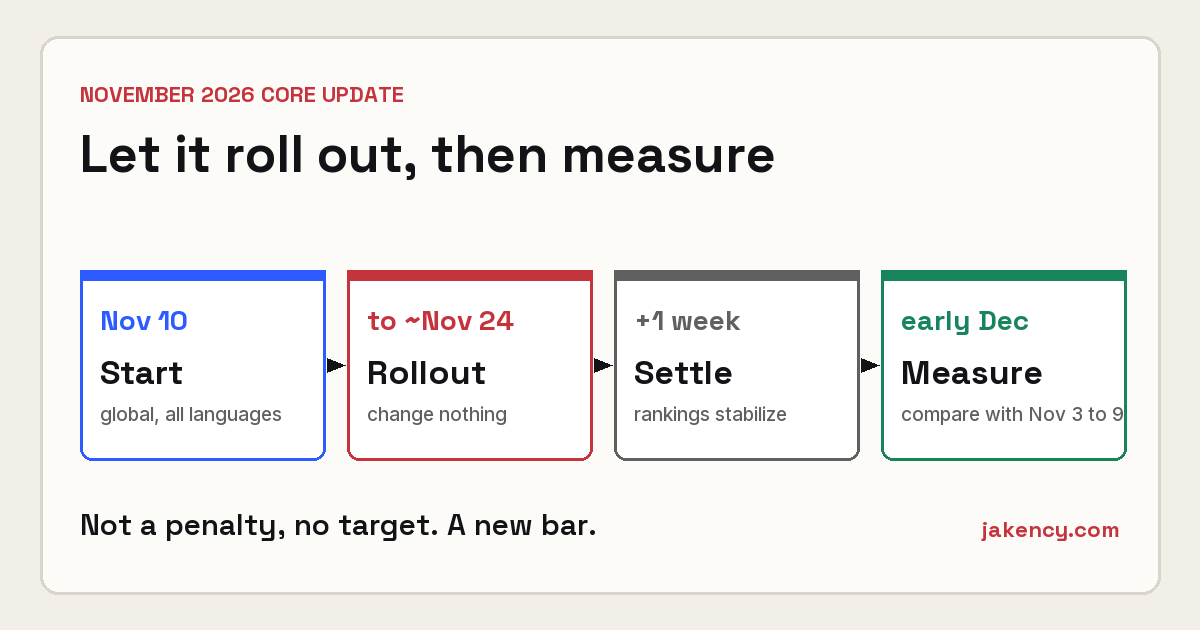
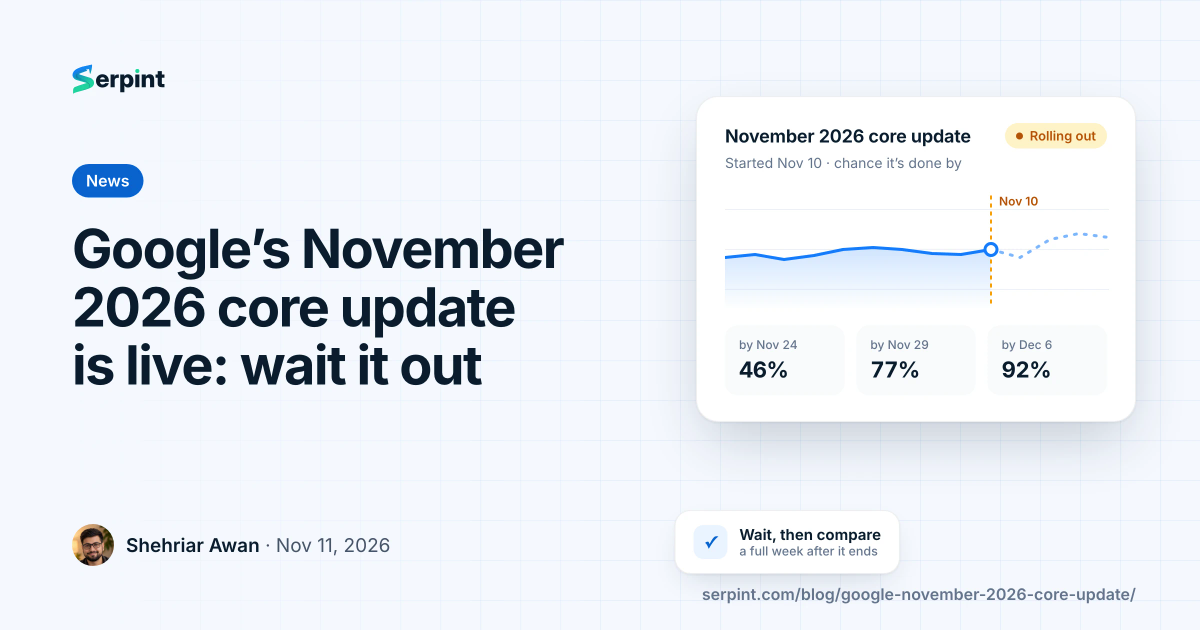
Google started rolling out its November 2026 core update on 10 November. It applies worldwide and to every language, and the company says the rollout may take up to two weeks. At the same time, Gemini 4 Hydrogen became the default model in AI Mode for all users. For small and medium businesses, these changes can move rankings while AI Overviews already appear on the majority of searches. Wevlopers works with owners who need clear steps instead of panic. The useful move right now is to protect your data, fix real problems, and prepare for better measurement once the update settles.
Wevlopers has watched multiple core updates this year. The pattern stays the same: rankings shift during the rollout, then stabilise. Reacting to daily swings usually creates more noise than insight. The goal is simple—keep publishing helpful content and wait for clean numbers.
What Google Has Confirmed
The November 2026 core update began around 10:06 a.m. Pacific time on 10 November. Google described it as a regular update designed to better surface relevant, satisfying content from all types of sites. It is the third core update of 2026, after March and May. No specific industry or site type was targeted. This is not a penalty or a manual action.
Separately, on 12 November Google made Gemini 4 Hydrogen available globally in Search. Robby Stein called it the biggest model upgrade to Search yet. The model improves intent understanding, produces more visual answers, and expands query fan-out so more relevant links can appear. AI Overviews continue to show on a large share of queries, including many commercial and local ones.
Local results are also evolving. Google Maps now places a Message button next to Call on many listings that have chat enabled. Some tests show leaner AI local packs. Consistency between your website and Google Business Profile matters more than ever.
What to Do While the Update Is Still Rolling Out
Do not rewrite titles, move content, or change URLs on pages that were performing well. Rankings can swing daily during a rollout. An edit made on day four makes it impossible to know whether a later recovery came from the update or from your change.
Do these practical steps now:
- Export your Search Console Performance data for 3–9 November (the week before the update started). Save clicks, impressions and average position by page and by query. This becomes your baseline.
- Add an annotation in Google Analytics for 10 November so future reports stay clear.
- Check the Google Search Status Dashboard every couple of days for the completion notice.
- Fix genuine technical issues immediately—broken pages, accidental noindex tags, server errors or incorrect prices. These are bugs, not ranking strategy.
- Keep your normal publishing schedule. Helpful new content still helps.
- On Google Business Profile, confirm that hours, services, address and messaging options match your website exactly. Test the Message button if you have it enabled.
Avoid bulk deletions, link buying, or “quick fixes” based on one or two days of data. Google has consistently advised against this during core updates.
How to Measure Impact Once the Rollout Ends
Wait until Google marks the update complete on the Search Status Dashboard. Then wait one full additional week. Compare that settled week against your 3–9 November baseline. Look at pages and queries separately. A drop of one or two positions is often normal variation. A page falling off the first page is worth reviewing.
Because the possible end date falls close to Black Friday and Cyber Monday in several markets, also compare year-over-year for commercial queries. Holiday traffic can mask or exaggerate organic movement.
For AI visibility, note which of your pages appear as citations in AI Overviews or AI Mode. Clear, factual answers near the top of a page, original data or first-hand examples, and accurate entity information all help. Structure content so the main answer is easy for both people and systems to extract.
Local and AI Considerations for Small Businesses
If you rely on local customers in India, Australia, the UK, USA or the UAE, keep your Google Business Profile complete and consistent. Respond to recent reviews. Make sure booking or quote pages (where relevant) are linked and match the information on your profile. The Message button only helps if someone actually replies.
AI Overviews already cover a high percentage of searches. Pages that answer a specific question directly, show real experience, and link to supporting evidence tend to get cited more often. Thin or generic content faces a higher bar under both the core update and the newer AI models.
Simple Checklist
- Baseline exported for 3–9 November
- Technical errors fixed
- Google Business Profile and website information match
- Message / chat options tested if enabled
- Search Status Dashboard checked for completion
- Measurement week planned after the rollout ends
- No major content rewrites until clean data exists
Core updates reward sites that already help searchers. The November 2026 rollout, combined with Gemini 4 Hydrogen in Search, simply raises the bar for relevance and clarity. Most businesses that stay calm, protect their baseline data, and continue publishing useful content come through in better shape.
If you want a second pair of eyes on your Search Console numbers or Google Business Profile while this update settles, Wevlopers offers a free audit. Reach out and we will look at the practical next steps for your site.


