
Google’s November 2026 core update finished on 24 November and, within the hour, Google pre-announced a December core update while also publishing a new Search ranking hub and clearer guidance on how AI Overviews and AI Mode select links. For small and medium businesses this is useful, not panic-inducing. The practical work is the same as always: make pages that actually help people, keep your technical basics clean, and measure properly before you change anything. At Wevlopers we see the same pattern with clients across India, Australia, the UK, USA and UAE — sites that focus on clear answers and solid local signals hold up better than those chasing shortcuts.
What Google actually said about the November update
The November 2026 core update started on 10 November and was marked complete on 24 November. Google called it a regular update designed to better surface relevant, satisfying content from all types of sites. It applied globally and to all languages. No new ranking requirements were announced, and Google did not single out any particular type of content or site.
In practice this means some pages move up, some move down, and many stay roughly where they were. The biggest volatility for many trackers appeared around the middle of the rollout rather than on day one. Because another core update is already announced for December (the first time Google has pre-announced one this way), the cleanest approach is to treat the next couple of weeks as a measurement window, not a rewrite window.
New ranking hub and AI link selection guidance
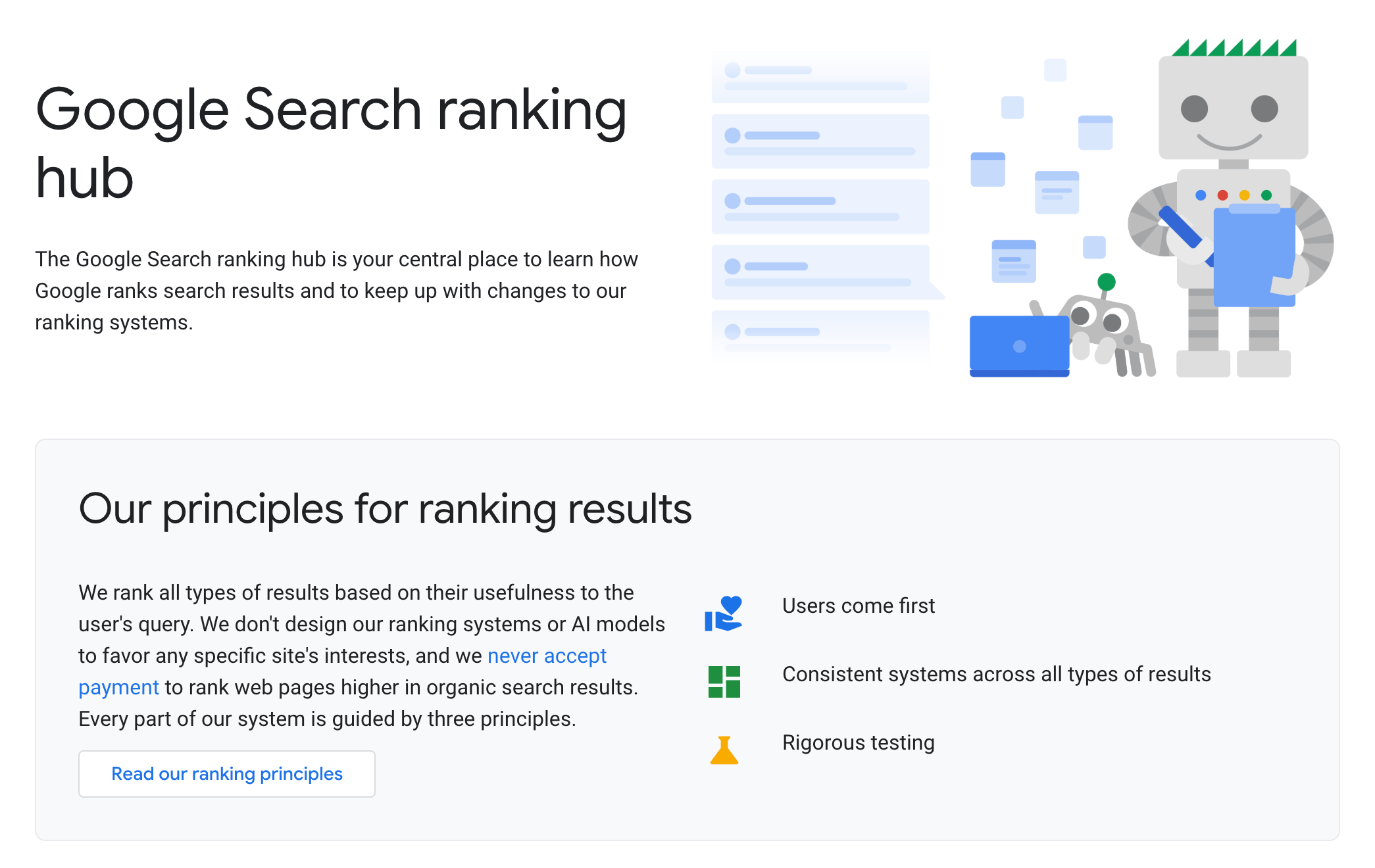
On the same day the November update finished, Google published a Search ranking hub on Search Central. It brings together ranking principles, how to stay informed about updates, and a structured feedback path. The principles page states that users come first, systems are consistent across result types (including AI Overviews), and every change is rigorously tested. Google is explicit that it does not design ranking systems or AI models to favour any specific site’s interests.
A companion page, “Attribution and factuality in Search generative AI features,” explains how AI Overviews and AI Mode choose supporting links. The process starts with ranked Search results and their snippets, may run related “query fan-out” searches, then grounds and cites pages that corroborate specific claims. Only pages that are indexed and eligible for a normal snippet can appear as supporting links. There is no separate AI index to “get into.”
This is good news for businesses that already rank for useful pages. It also means that thin, scaled, or purely AI-generated content that does not add unique value is less likely to be cited, even if it temporarily ranks.
Practical checklist for SMBs right now
Do these in order. Skip the temptation to “fix” rankings that are still settling.
1. Export clean baselines. In Google Search Console, export performance data for the week before the rollout (roughly 3–9 November) and the week after completion (from 25 November onward). Compare clicks, impressions and average position by page, not just by query. Wait until at least early December before treating any drop as permanent.
2. Check the pages that actually drive revenue. Look at your top service pages, location pages and key blog posts. Ask the simple questions Google has published for years: Does the page satisfy the intent of the search? Is the information clear, complete and up to date? Would a real customer find it useful without extra clicks?
3. Confirm technical eligibility for AI citations. Make sure important pages are indexed, return a 200 status, and are not blocked by robots.txt or a nosnippet directive. In Search Console, confirm that the site is not excluded from Search generative AI features. Fix any soft 404s, thin location pages or duplicate content that could dilute relevance.
4. Strengthen local signals if you serve a geographic area. Keep Google Business Profile hours, categories, photos and attributes accurate. Reply to recent reviews. The same content that helps a local pack also feeds AI answers that mention local businesses. Sites that already have clear NAP consistency and genuine customer signals tend to be more stable through core updates.
5. Improve one page properly instead of rewriting everything. Pick the page that lost the most useful traffic or the one that has the highest commercial intent. Add specific examples, clearer headings, original photos or data, and internal links to related service pages. Avoid mass AI rewrites that simply restate what already exists on the internet.
Here is a short recap of the announcements from Search Engine Land:
What to expect from the December update
Google has said the December core update will improve how its systems understand and rank relevant content, including for longer and more complex questions, and will also improve personalised results for users who have personalisation turned on. No start date has been given yet. Because notice has been given in advance, the best preparation is simply to continue the work above rather than guessing at a new “hack.”
For most small and medium businesses the winning pattern remains unchanged: publish pages that answer real customer questions with clear, original information; keep technical foundations solid; and measure before you react. Core updates reward consistency over the long term.
If your Search Console numbers moved after the November update and you want a second pair of eyes on the data, Wevlopers offers a free audit focused on the pages that matter most for your business. Just reply or reach out through the contact form on wevlopers.com and we will take a look.


