
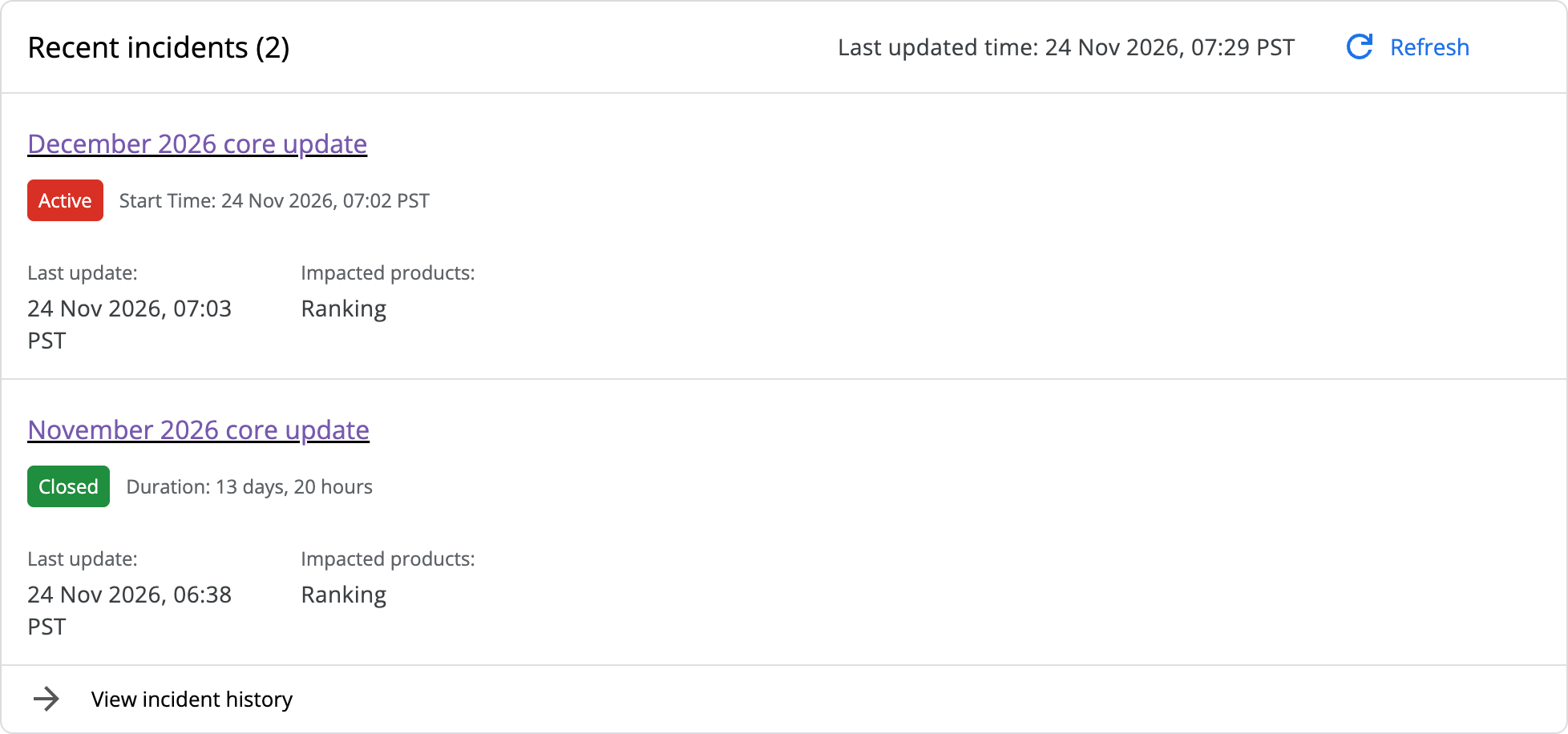
Google finished rolling out its November 2026 core update on 24 November after nearly 14 days. At Wevlopers we help small and medium businesses across India, Australia, the UK, USA and the UAE stay visible when Google changes the rules. Within an hour of marking the November update complete, Google pre-announced a December 2026 core update focused on longer, more complex questions and personalised results. At Wevlopers we see this as a clear signal that useful, specific content still wins, while scaled low-effort pages continue to lose ground. If you run a local service, healthcare practice, real-estate agency or any SMB website, the next few weeks matter more than usual.
What the November 2026 Core Update Actually Did
Google started the November update on 10 November and confirmed completion on the Search Status Dashboard at around 9 am ET on 24 November. Early data from visibility tools showed the biggest movement around mid-November. Sites that published large volumes of templated or lightly edited AI content dropped. Lead-generation pages built mainly from informational content also lost ground, especially in finance, health and legal topics. Original sources and pages that answered specific questions with clear experience held or gained.
Google’s own guidance remains the same: it rewards helpful, reliable, people-first content. The October update to its generative AI guidance already stressed the need to manually fact-check titles, meta descriptions, alt text and structured data. The November update appears to have enforced that standard more strongly.
AI Overviews Are Pushing Links Further Down
At the same time, tracking data showed Google is placing the first inline link deeper inside AI Overviews. In late September roughly three-quarters of Overviews put the first link in the opening third of the answer. By mid-November that figure had fallen to just over half. Google also published new documentation explaining how it selects and links sources in AI Overviews and AI Mode: it starts with ranked results, may run related “query fan-out” searches, then cites pages that corroborate the answer.
For practical purposes this means two things. First, ranking well for the main query and its related sub-questions still puts you in the pool that AI features draw from. Second, users may have to scroll further before they see a clickable link, so the pages that earn citations need to be clearly useful once people arrive.
What the December 2026 Core Update Signals
Google’s pre-announcement (the first time it has given advance notice of a core update) says the December update will improve how its systems understand and rank relevant content for longer and more complex questions, and will refine personalised results for people who have personalisation turned on. No exact start date has been given yet.
This lines up with the way people already search. Short keyword queries are giving way to fuller questions such as “best waterproof hiking boots for wide feet under 150 dollars that work in wet Australian winters” or “emergency plumber near me who can fix a burst pipe tonight and accept card payment.” Pages that answer the whole question with specifics, local proof and clear next steps are better positioned than generic overviews.
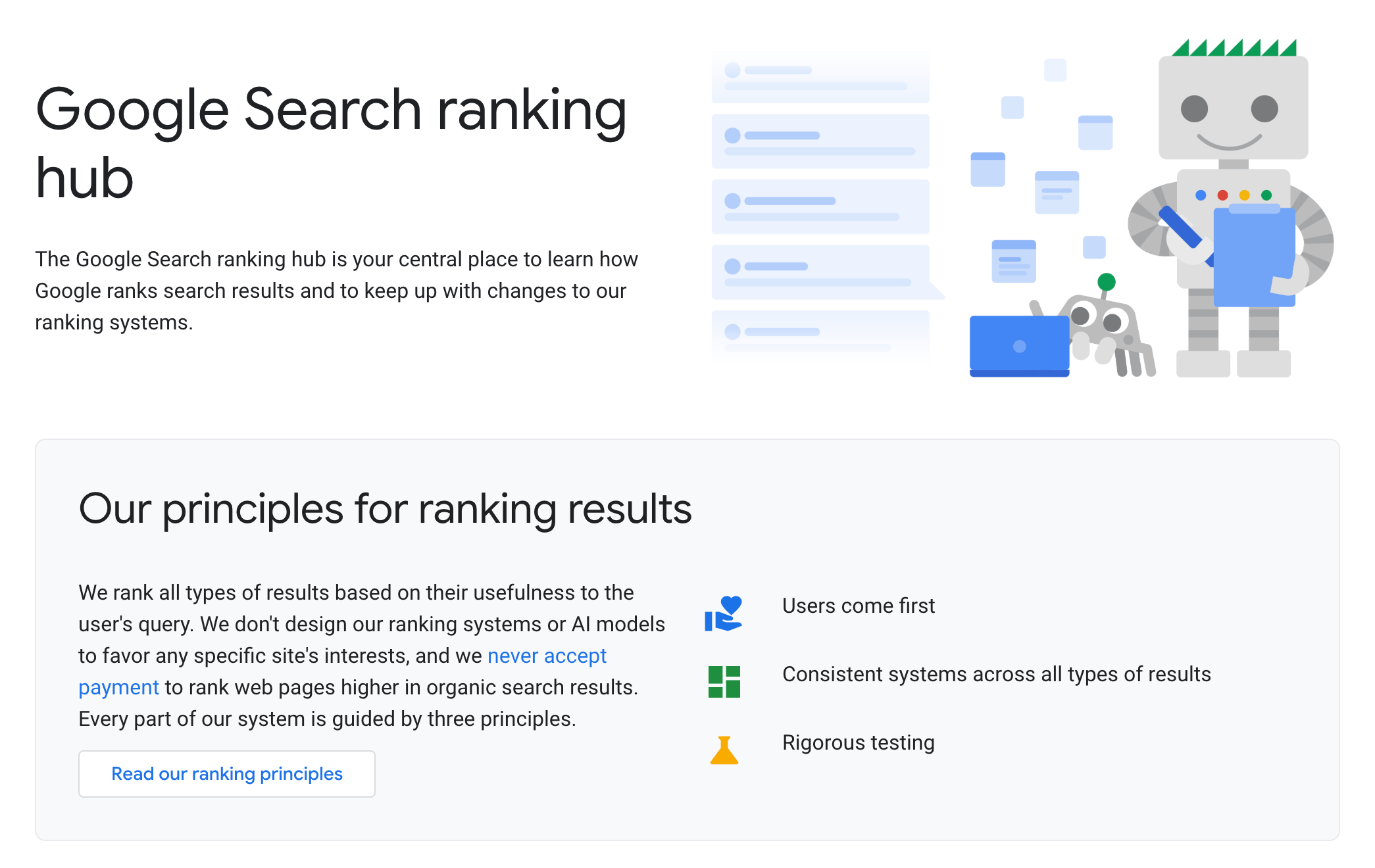
Google also launched a new Search ranking hub on Search Central. It brings together ranking principles (“Users come first,” consistent systems across all result types including AI features, and rigorous testing), advance-notice rules, and a way for verified site owners to submit feedback via Search Console after major updates.
Practical Steps for Small and Medium Businesses
1. Wait one full week, then measure. Google recommends waiting at least a week after a core update finishes before comparing Search Console data. Annotate 10 November and 24 November in your analytics. Compare the week after completion with a clean week before the update started. Separate organic clicks from AI Overview or AI Mode impressions if those reports are available.
2. Audit content for real usefulness. Open your top landing pages and ask: Does this page answer a specific question with original detail, local examples or clear proof? Remove or rewrite thin, repetitive or purely AI-generated sections. Make sure titles, meta descriptions and image alt text were reviewed by a person.
3. Strengthen pages that target longer queries. Add dedicated sections or new pages that cover the full intent of complex searches in your niche. Include pricing ranges, timelines, service-area notes, photos of real work and answers to common objections. Internal links from related pages help both users and Google’s systems.
4. Keep your Google Business Profile accurate. For local businesses the profile remains a major source of calls and direction requests. Update holiday hours, services, photos and review responses. Consistent NAP information across your website and profile still matters.
5. Check technical basics. Confirm important pages are indexed, return 200 status codes, and are eligible to show snippets. Review Core Web Vitals and mobile usability. Fix any crawl or indexation issues before the December update begins.
6. Watch the December rollout. Once Google announces the start date, avoid major site migrations or large content cuts during the rollout window. Use the new Search Console feedback option only with clear examples if you see unexpected, widespread drops after the update settles.
Bottom Line
The November 2026 core update rewarded pages that demonstrate effort, originality and accuracy while reducing visibility for scaled, low-effort content. The upcoming December update is expected to place even more weight on how well sites answer longer, more specific questions and serve personalised results. For most small and medium businesses the practical response is the same: publish clear, experience-based pages that fully answer the questions your customers actually ask, keep technical foundations solid, and measure results after each update settles.
If you want a second pair of eyes on your Search Console data or a practical plan for the December update, contact Wevlopers for a free audit. We focus on real results for businesses that need more calls, bookings and leads, not just rankings.


