
Many small business owners now use AI tools to draft blog posts, service pages, and product descriptions. At Wevlopers we see this every week. The speed is useful, but Google has tightened its advice on how that content should be handled. In October 2026 Google updated its guidance on generative AI content and said it is critical to manually fact-check and review everything before publishing. Wevlopers works with clients across India, Australia, the UK, USA and the UAE, and the same rule applies everywhere.
What Google Actually Changed
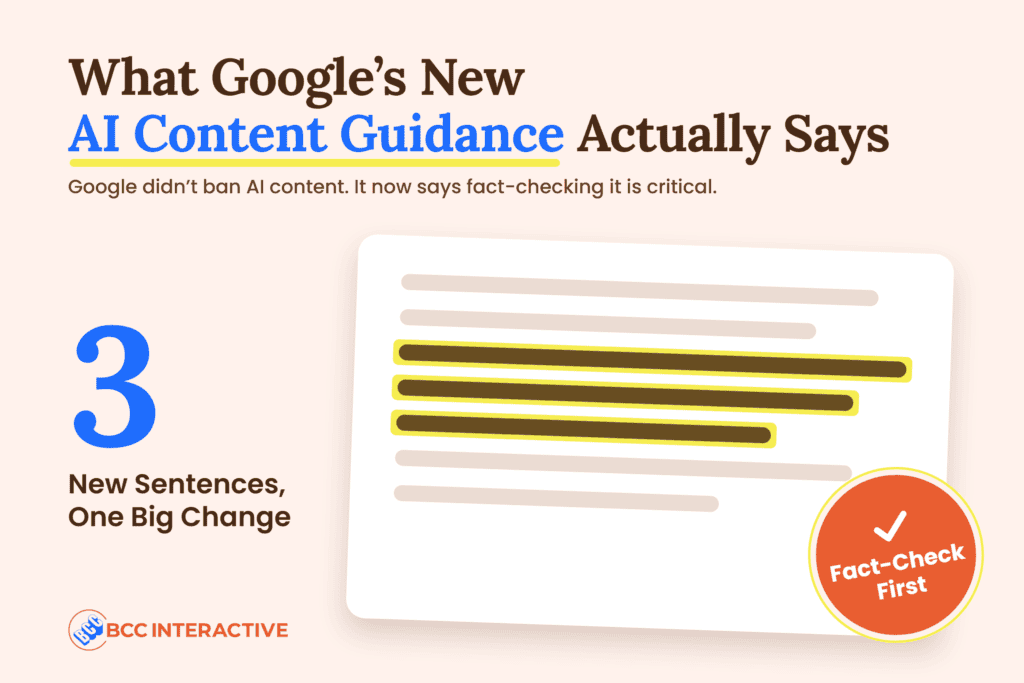
Google’s Search Central page on using generative AI content was updated on 1 October 2026. The key new sentences explain that generative models do not look up facts. They predict likely word sequences based on training data, so the output can contain hallucinations. Because of that, “It is critical to manually factcheck and review all AI-generated content for accuracy and trustworthiness before publishing.”
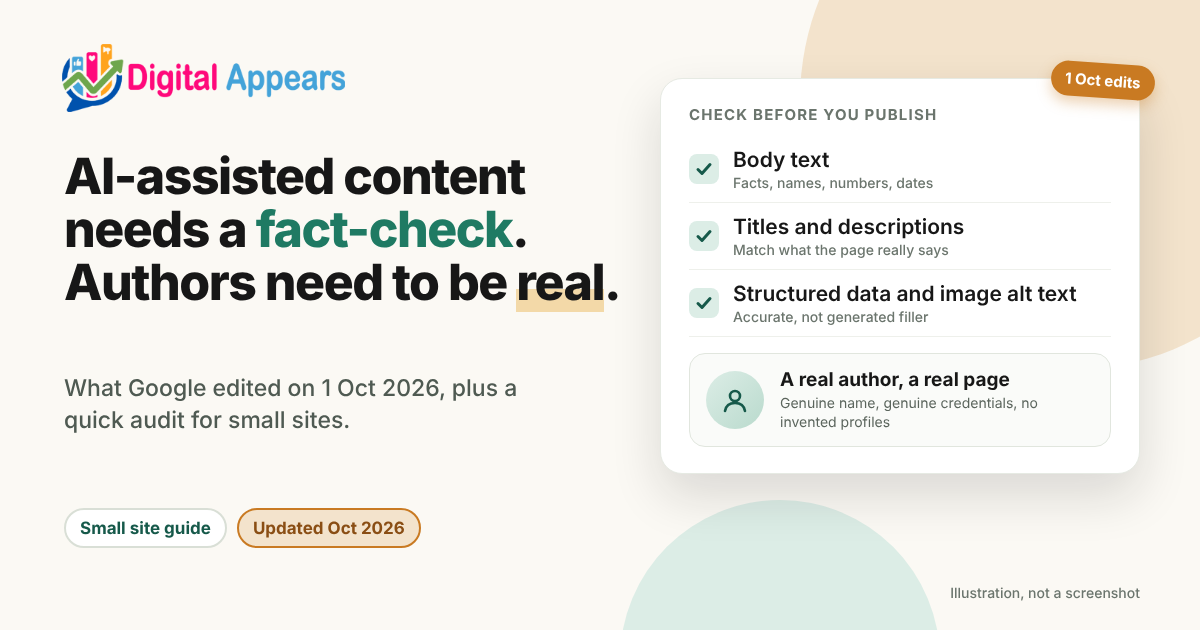
The review covers more than the main article text. Google specifically names title elements, meta descriptions, structured data, and image alt text. These pieces often appear in search results and AI Overviews, so errors there hurt trust quickly.
Around the same time, the helpful content guidance was also updated. It defines main content more clearly and reminds quality raters to look at effort, originality, talent or skill, and accuracy. It also warns against deceptive authorship, such as AI-generated headshots or made-up expert names.
Why This Matters for AI Visibility
AI Overviews now appear on a large share of Google searches. Studies from late 2026 put the figure at 80 percent or higher for many commercial and informational queries. When an Overview appears, classic organic click-through rates drop sharply for the top results. Pages that get cited inside the Overview still earn more clicks than those that do not, but accuracy and clear ownership of the information become more important.
Google’s systems pull from the same index that powers regular Search. Content that is factually shaky or looks mass-produced without human oversight is less likely to be selected as a source. Real author details and first-hand experience also help.
Practical Checklist for Small Businesses
Here is a simple process we recommend at Wevlopers for any AI-assisted content:
1. Fact-check every claim. Numbers, dates, product specs, local regulations, and competitor comparisons all need a human look. Use primary sources where possible.
2. Review titles, meta descriptions, and alt text. These are often generated quickly and forgotten. Make sure they match the page and contain no invented claims.
3. Use real authorship. Put the actual writer’s name and relevant experience. Link to a real author page or LinkedIn profile. Avoid stock AI headshots or fictional credentials.
4. Add something only you know. Include local examples, client results (with permission), process photos, or specific steps from your own work. This satisfies the “effort and originality” signals.
5. Check structured data. If you use FAQ, HowTo, or Article schema, confirm the marked-up text appears on the page and is accurate.
6. Keep a short review log. A simple note of who checked what and when is useful if questions arise later.
Watch This Short Explanation
This recent video covers practical steps for getting content cited in AI Overviews while staying focused on quality signals.
What to Do This Week
Open your last five AI-assisted pages or posts. Run the checklist above. Fix any factual errors and weak authorship details first. Then look at Search Console’s Generative AI performance report (available to all sites since August 2026) to see which pages are already appearing in AI features.
If ranking volatility has hit your site in the last week or two, focus on the pages that dropped and strengthen their accuracy and unique value rather than publishing more volume.
Small and medium businesses do not need to stop using AI. They need a reliable human review step. That single habit protects rankings and improves the chance of being cited when Google’s AI answers questions in your industry.
Need help reviewing your current content or setting up a clean process? Contact Wevlopers for a practical look at your site.