
Local rankings on Google Maps changed fast in late October 2026. Proximity to the searcher now carries more weight than many of us expected, and businesses that used to rank a few miles out are seeing their visibility shrink.
At Wevlopers we work with home service businesses across India, Australia, the UK, USA and UAE. The pattern is the same: rankings that looked stable from the office suddenly disappear for customers even a mile or two away. Google has not confirmed an official update, but multiple local SEO scans show the radius tightening, especially for high-intent queries like emergency plumber or locksmith near me.

If your Google Business Profile rankings dropped overnight and you changed nothing, this is likely why. Distance has always mattered. It just matters more right now for service businesses that customers expect to arrive quickly.
What Practitioners Are Seeing
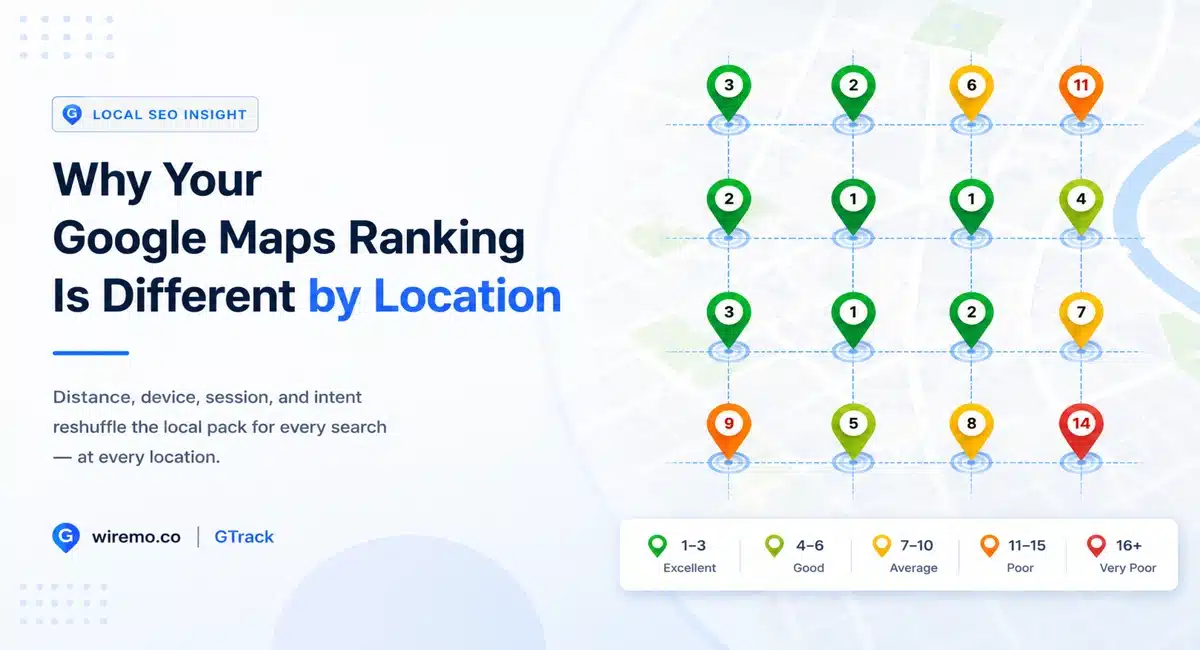
Local SEO scans from late October show the same pattern across many markets. One Phoenix personal injury firm watched its average map ranking fall from 2.5 to 16.9 on the same grid. Competitors experienced similar drops. Businesses that previously ranked three to five miles away vanished from results for searchers just a fraction of a mile closer to a competitor.
Service area businesses feel this hardest: plumbers, HVAC companies, locksmiths, electricians and home repair teams. Google appears to be weighting pure proximity higher relative to review volume and backlinks for urgent queries. A smaller competitor with fewer reviews can now outrank a well-established profile simply by being closer to the person searching.
This does not mean reviews or website authority stopped mattering. It means the effective radius where those signals can overcome distance has narrowed for many categories. Rankings still vary by exact query, time of day and whether the searcher uses "near me" language. Checking from your own location tells you almost nothing useful.
Why This Matters for Home Service Businesses
Customers searching for emergency services expect the nearest reliable option. Google seems to be matching that expectation more strictly. If your verified address sits on the edge of your main service area, you may have lost visibility for high-intent searches even if your profile is complete and your reviews are strong.
At the same time, AI Overviews and AI Mode treat distance differently. Some analyses show almost no correlation between proximity and which businesses get recommended in AI answers. That creates a split: you can still win the map pack close to your pin, but you need different signals (clear service pages, consistent entity information, and useful content) to appear in the AI layer.
Practical Steps to Protect and Expand Your Local Visibility
You cannot move your pin, but you can tighten everything else and measure the real radius.
1. Confirm your primary category and services. The primary category remains one of the strongest controllable signals. Make sure it is the most specific true category. List the exact services you offer using Google’s predefined options where they exist. Incomplete service lists hurt more when proximity is tighter.
2. Keep hours accurate and update special hours. Being open at the time of search ranks high in expert surveys. Wrong hours push you out of consideration for “open now” queries.
3. Strengthen review velocity and recency, not just total count. Recent reviews matter more than a large old pile. Ask every satisfied customer the same way, reply promptly, and watch for spam spikes that Google may temporarily pause.
4. Run a simple geo-grid check. Search your main keywords from several points around your service area, not just from your office. Note where you appear in the top three and where you drop out. Free or low-cost tools exist, or you can do a manual sample with a phone in different neighborhoods. This shows your real ranking radius instead of a single misleading number.
5. Align your website with the profile. Create or update dedicated service pages that match the services listed on your Business Profile. Clear, specific content helps both the local pack and AI recommendations. Avoid thin location pages that only swap city names.
6. Monitor the 4-day suggested edit window. Google now gives owners four days to accept or reject suggested edits. Turn on notifications so a competitor or random user cannot quietly change your hours, category or phone number.
These steps will not instantly restore a five-mile radius if Google has tightened it. They will keep you competitive inside the radius you still own and improve your chances in AI answers where distance matters less.
What to Watch Next
Google has not published an official statement confirming a proximity reweight. The changes could be an experiment, a side effect of other systems, or a lasting shift. Track your own call volume and direction requests alongside ranking grids. If phone leads from farther neighborhoods drop while closer ones stay steady, the radius change is real for your business.
Focus on the signals you control: accurate profile data, recent reviews, clear service content, and consistent NAP information across the web. Those fundamentals still move rankings inside whatever radius Google is using today.
If your map rankings or calls shifted in the last two weeks and you want a clear picture of your actual service-area visibility, Wevlopers can run a quick local audit and show you the practical fixes that matter most for your market. Contact us for a free local SEO checkup.


