
Local businesses across India, Australia, the UK, the USA and the UAE have been seeing sudden ranking drops in their SEO tools since mid-September 2026. At Wevlopers we have checked dozens of these cases, and in most of them the rankings never actually moved for real searchers. Wevlopers clients who panicked and rewrote pages or fired agencies later discovered the drop existed only inside the rank tracker. Google has been serving “poisoned” results pages to automated tools — complete-looking SERPs where the usual websites are swapped out — and the problem has affected 8% or more of tracked pages in recent weeks.
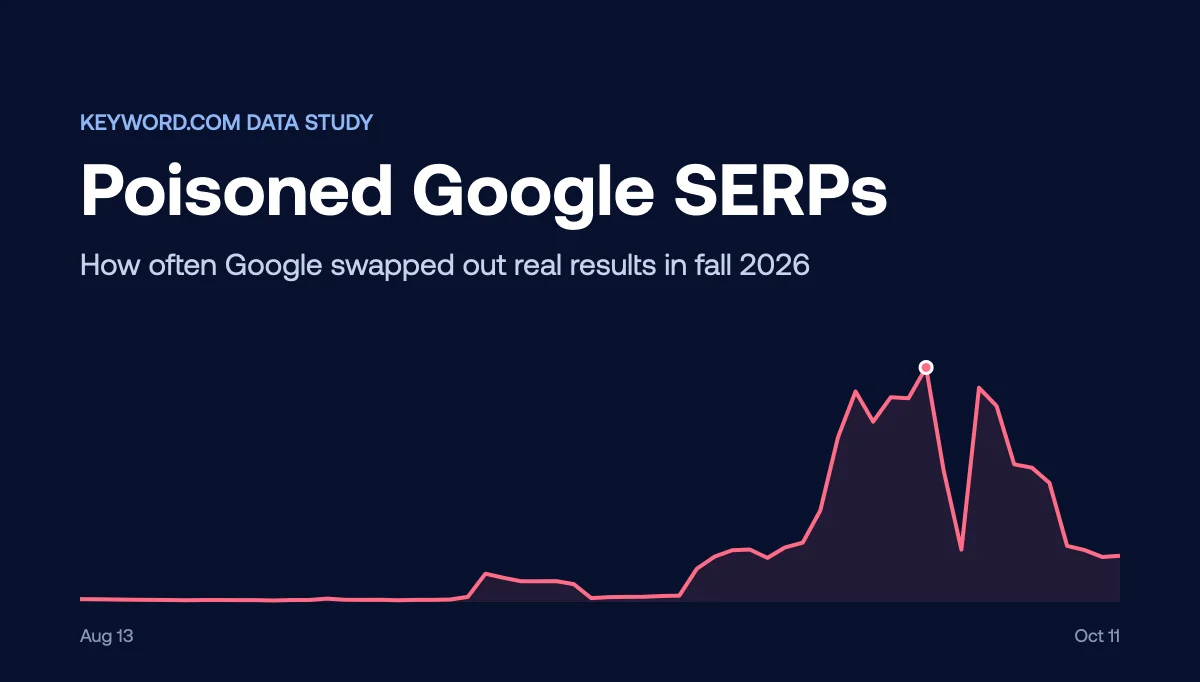
This is not a conspiracy theory. Multiple independent rank trackers (Nozzle, Keyword.com, AccuRanker and others) published data showing the same pattern. On a normal day, about 90% of a keyword’s top-10 domains stay the same from one check to the next. On a poisoned SERP that figure drops to roughly 20–27%. Tracked sites fall out of the top 10 on more than half of these poisoned pages, yet 78% of the time the original sites return within three days. The peak hit around 27–35% of pages on the worst days in late September, right around Google’s September spam update, and the rate is still elevated in October.
What a poisoned SERP actually looks like
Nothing on the page tells you it is fake. There is no error message, no CAPTCHA, and the results still look on-topic. The usual ranking domains are simply replaced by others (sometimes completely unrelated sites). Pagination often stops early. Real users searching the same keyword from a normal browser usually still see the old results. That is why your rank tracker can show a crash while Google Search Console shows steady or even improved impressions and clicks.
Markets we work in have been hit at different rates. India has seen roughly 11% of judged pages poisoned, Australia around 13–14%, the UAE higher still, while the UK has been among the least affected of the large markets. “Near me” queries and longer phrases have been slightly more likely to be poisoned. Home services and legal categories have shown higher rates in US data.
Why Google is doing this
Rank trackers and AI systems collect large volumes of search results the same way scrapers do. Google has responded with a mix of IP blocking, more CAPTCHAs, and these swapped-result pages aimed at suspected bulk collectors. The side effect is that legitimate SEO tools are caught in the crossfire. Google has not publicly confirmed the tactic, but the pattern matches what the trackers measured and has been widely discussed in the industry since early October.
What local businesses should check instead of panicking
Before you rewrite a page, change a Google Business Profile category, or pause content work, run these five checks:
1. Google Search Console first. Look at the Performance report for the exact dates your tracker showed the drop. Filter by page or query if needed. If impressions and clicks stayed flat or rose, the ranking change was almost certainly only in the tracker.
2. Manual search from a clean browser. Open an incognito window, search the keyword, and note the top results. Repeat from a different network if possible. Compare that against what the tool reported.
3. Wait three days and recheck. Most poisoned pages return to normal within that window. If the tool still shows the drop after three clean days and Search Console also shows a real decline, then investigate further.
4. Check your Google Business Profile performance. Calls, direction requests and website clicks from the profile are harder to fake and often more useful than organic rank positions for local businesses. Google is also testing more detailed performance reports right now that break out engagement, reviews, search trends and audience data.
5. Look at AI Overviews separately. AI Overviews now appear on more than 80% of searches according to recent tool data. Your organic rank can stay stable while visibility inside the AI answer changes. Use Search Console’s Generative AI performance report (available worldwide) to see impressions from AI features.
Practical next steps this week
Treat any sudden multi-position drop that lasts less than three days as suspicious until you confirm it in Search Console and a manual search. Keep focusing on the things that still move real local results: accurate Google Business Profile details, fresh photos, genuine reviews, and clear service pages that answer the questions customers actually ask. Those signals feed both the local pack and AI answers.
If your rankings look unstable across several tools at once, or if Search Console also shows a drop, that is worth a proper audit. Otherwise, the data says most of the recent drama is noise created by Google’s anti-scraping measures.
Need a clear second opinion on whether a ranking change is real? Wevlopers offers a free local SEO and Google Business Profile audit for small and medium businesses. Contact us and we will check the numbers with you.


